

Quick clarification — three different documents share similar names:
- Living will (this article) — controls medical decisions if you become incapacitated
- Last will and testament — distributes your property after you die
- Living trust — holds property in trust to avoid probate
If you came here looking to distribute your property to family, you probably want a last will and testament. See our full comparison guide if you’re not sure.
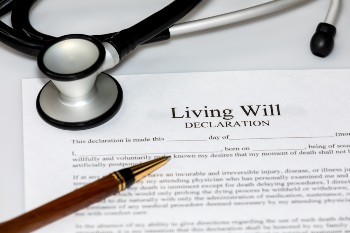
A Louisiana living will — officially called a Declaration Concerning Life-Sustaining Procedures under La. R.S. 40:1151 — is a written instruction telling doctors and hospitals what medical treatment you want (or don’t want) if you’re terminally ill or permanently unconscious and can’t communicate. It’s part of a complete Louisiana estate plan but is a completely different document from a last will and testament.
Make Your Wishes Known for Your Peace of Mind
In the emotional aftermath of an accident or medical emergency, your loved ones will probably want to do whatever it takes to save your life. However, if you know that you don’t want extreme measures to be taken to extend your life if there is no chance of recovery, you will need to have that desire legally documented ahead of time. A Louisiana living will declaration is a simple legal statement that documents your desire that your “dying shall not be artificially prolonged.”
On the form, you will initial one of the following statements, depending on your wishes:
- That all life-sustaining procedures, including nutrition and hydration, be withheld or withdrawn so that food and water will not be administered invasively.
- That life-sustaining procedures, except nutrition and hydration, be withheld or withdrawn so that food and water can be administered invasively.
The final decision will still be up to your family, but the living will can remove a significant burden. The living will can also provide additional instructions about end-of-life care, funeral and burial wishes, and more.
The second important document you should prepare now is a healthcare power of attorney. This document names an agent, usually a family member, to make medical decisions on your behalf if you are unable to do so. Having this document in place can prevent a court battle among relatives over what steps should be taken to treat you if you are incapacitated. It can not only save time but can prevent family conflict.
Make a Living Will Part of Your Comprehensive Estate Plan
When you work with the estate planning team at Scott Law Group, Estate & Probate Division, we will make sure your plan includes all of the necessary documents to protect your assets and your family in the case of a medical emergency, or after your passing. Call us today to discuss the steps you should take to get started designing your Louisiana estate plan.
The Living Will Is Part of a Complete Estate Plan
A Louisiana living will declaration works best when it is part of a comprehensive estate plan that also includes a healthcare power of attorney, a durable power of attorney for financial matters, and a last will and testament. Together these documents ensure that your healthcare preferences, financial affairs, and property distribution are all addressed if something happens to you.
Many people delay executing these documents because they feel they are young or healthy. But accidents and medical emergencies happen without warning, and the legal documents that protect you and your family can only be executed while you have capacity to sign them. Scott Law Group helps Louisiana residents and families create complete estate plans. Call (504) 264-1057 to schedule a consultation.
This article provides general information about Louisiana succession law and is not legal advice for your specific situation.
What a Living Will Does — and What It Does Not Do
A living will and a last will and testament are two entirely different legal documents that serve opposite purposes and operate at opposite ends of life. A last will and testament controls what happens to your property after you die. A living will — formally called a Declaration Concerning Life-Sustaining Procedures under Louisiana Revised Statute 40:1151 et seq. — controls what medical treatment you receive if you become unable to communicate your own wishes while still alive.
Specifically, a Louisiana living will allows you to direct whether life-sustaining procedures — mechanical ventilation, artificial nutrition and hydration, cardiopulmonary resuscitation, and similar interventions — should be used or withheld if you are in a terminal condition or a persistent vegetative state. Without this document, medical providers and family members may be legally unable to honor your wishes, and family members who disagree about your care can find themselves in a legal dispute during one of the most difficult periods of their lives.
What a living will does not do: it does not distribute your property, appoint anyone to manage your finances, or name a guardian for your children. It has no effect after you die — it is solely an instruction to medical providers about care during your lifetime. A complete estate plan includes both a testamentary document (a will or trust) for property and advance directives (a living will and a healthcare power of attorney) for healthcare decisions.
Living Wills and Related Healthcare Planning Documents
A living will works best when paired with a healthcare power of attorney (also called a healthcare proxy or medical power of attorney). The living will states specific directives about life-sustaining treatment. The healthcare power of attorney appoints a trusted person — called the healthcare agent or healthcare proxy — to make medical decisions on your behalf for situations not covered by the living will. Together, they create a complete framework: specific instructions for specific situations, and a trusted decision-maker for everything else.
A Louisiana POLST (Physician Orders for Life-Sustaining Treatment) form is related but different. A POLST is a physician’s order — signed by both the patient and their physician — that travels with the patient through different healthcare settings and is immediately enforceable by any medical provider. A living will is a legal document that guides the physician in creating a POLST; the POLST is the actionable medical order. For patients with serious or terminal illness, both documents together provide the strongest protection that their wishes will be honored.
A durable power of attorney for finances is separate from healthcare directives. It appoints someone to manage your financial affairs — pay bills, manage investments, handle real estate transactions — if you become incapacitated. Without a durable power of attorney, a court-appointed curator must be obtained to manage your finances if you lose capacity. This proceeding is expensive, public, and time-consuming — and it could happen at the worst possible time, when your family is already dealing with a health crisis.
Why a Living Will Belongs in Every Louisiana Estate Plan
An estate plan that includes only a will and perhaps a trust is incomplete. The documents that control your affairs during a period of incapacity — before death — are equally important and often more immediately needed. Most people will experience at least one period of incapacity before death; many will experience extended periods. Without advance directives, the family members left to make decisions on your behalf have no legal documentation of your wishes and may be forced to apply to a court for guardianship or curatorial authority.
Family conflicts over medical care are among the most painful and expensive disputes an estate planning attorney sees. When a patient has not expressed their wishes in writing, family members who disagree about treatment may pursue legal proceedings — each seeking to be appointed as the decision-maker. Louisiana courts have held that a clearly expressed, documented advance directive carries substantial legal weight. A living will short-circuits these conflicts before they begin.
Practical accessibility matters as much as legal validity. A living will stored in a safe deposit box is useless in an emergency — if the document cannot be produced, medical providers will proceed without it. Louisiana law allows living wills to be registered with the Louisiana Secretary of State for a small fee, which makes them electronically accessible to healthcare providers across the state. Copies should be provided to your physician, your healthcare agent, and your family, and kept somewhere accessible in your home. Completing this document is not morbid — it is one of the most compassionate things you can do for the people who love you.
Frequently asked questions
Is a Louisiana living will the same as a last will and testament?
No. A living will (also called an advance directive) tells doctors what medical treatment you want if you can’t communicate. A last will and testament distributes your property after you die. They’re completely different documents. See our complete comparison guide.
How much does a Louisiana living will cost?
A living will alone typically costs $150–$400 to prepare. Most clients get a living will as part of a broader estate plan package, which includes a last will, powers of attorney, and HIPAA authorization for $1,500–$2,500 total.
Do I need a lawyer to make a Louisiana living will?
Legally, no — Louisiana law (R.S. 40:1151) lets you write your own as long as it meets the statutory requirements. The state publishes a model form. But coordinating the living will with your other estate planning documents is much easier with a lawyer’s help, and a single bundled engagement typically costs only slightly more than a stand-alone living will.
What’s the difference between a living will and a medical power of attorney?
A living will contains your written instructions about end-of-life medical care. A medical power of attorney names a person who can make medical decisions on your behalf when you can’t. They work together — the living will gives the agent guidance about your wishes.
What if I become incapacitated without a living will?
Louisiana law (R.S. 40:1159.6) lists a default order of decision-makers: spouse, then adult children by majority, then parents, then siblings. They may not know your wishes — which is the main reason to have a living will in place.
Does a Louisiana living will go through court?
No. A living will is presented to your doctors and hospital when needed. It’s not filed with any court. Some people register their living will with the Louisiana Secretary of State’s living will registry for easier hospital retrieval, but it’s not required.
Can I change my living will after I sign it?
Yes, anytime — as long as you have decisional capacity. You can revoke it orally or in writing, then prepare a new one. Update it after major life events (marriage, divorce, change in health) or every 3–5 years.
Where should I keep my Louisiana living will?
Provide copies to: your primary care doctor (to add to your medical record), your designated healthcare agent (the person named in your medical POA), and your closest family members. Keep the original in an accessible location at home — not in a safe deposit box that nobody else can access.
Is a living will what you actually need?
If you’re here because you want to make sure your property goes to your family when you die, a living will isn’t what you need. You want a last will and testament or possibly a living trust. See our side-by-side comparison to figure out which.
If you’re here because you want to control what happens to your medical care if you can’t communicate — you’re in the right place. A living will is exactly that document. It works best alongside a medical power of attorney (a separate document naming someone to make medical decisions on your behalf).
Contact Scott Law Group — Estate Counsel or call (504) 264-1057 to discuss your situation. Most clients leave their initial consult knowing exactly which documents they need.