

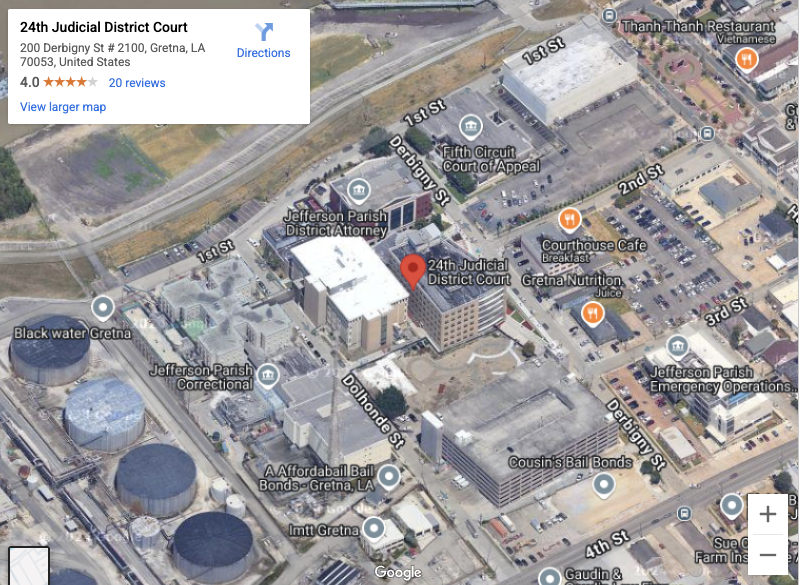
When a loved one passes away in Gretna, their estate doesn’t automatically transfer to the family. In Louisiana, we call the probate process succession—and it’s handled through the 24th Judicial District Court located right here in Gretna. This process ensures that the deceased person’s assets are legally transferred to their rightful heirs, whether or not a will was left behind.
If you’ve never been through this process before, here’s what you can expect from probate in Gretna—and how to avoid common mistakes along the way.
Step 1: Determine If a Succession Is Required
Not every estate must go through a full court-supervised process. In some cases, small succession affidavits can be used to transfer limited assets without a formal court filing. However, if there’s real estate involved or the estate exceeds $200,000 in value, you will likely need to open a formal succession.
At Scott Law Group – Estate Counsel, we help you determine which path is right based on the size and structure of the estate.
Step 2: File in the 24th Judicial District Court in Gretna
For residents of Gretna and surrounding areas of Jefferson Parish, probate cases are filed in the 24th Judicial District Court. This courthouse is familiar territory for our legal team. We prepare all required documents and manage communication with the court to keep your case moving efficiently.
Step 3: Appoint a Personal Representative
If the deceased had a will, it likely names an executor. If there’s no will, the court will appoint an administrator, typically a family member. This person is legally responsible for managing the estate, paying off debts, and distributing remaining assets.
We guide you through this process and handle the necessary court pleadings to formalize the appointment.
Step 4: Inventory, Value, and Settle the Estate
After appointment, the representative must:
-
Locate and value assets
-
Notify creditors
-
Pay outstanding debts and taxes
-
Maintain real estate or business property
We help gather necessary documents like titles, bank records, and appraisals, and ensure proper legal procedures are followed.
Step 5: Distribute Assets and Close the Succession
Once debts are settled, the court issues a judgment of possession, which officially transfers assets to heirs. This is often the final step, but doing it improperly can create title issues down the line.
We ensure the succession is closed cleanly and your family is legally protected.
What Jefferson Parish Residents Need to Know Before Filing Succession
The 24th Judicial District Court handles all succession matters for Jefferson Parish residents. Petitions are filed at the Jefferson Parish Courthouse in Gretna, located at 200 Derbigny Street. For straightforward, uncontested successions, the court can often schedule a hearing and sign a Judgment of Possession within four to eight weeks of a complete and properly-prepared filing package. Understanding what the court requires before you file — rather than learning it through rejected paperwork — makes the difference between a four-week succession and a four-month one.
The threshold question before filing is whether a full judicial succession is actually required. Louisiana law allows smaller estates (under $200,000 in succession estate value) to use a small succession affidavit rather than a court proceeding. But Jefferson Parish’s housing market means that even modest homes frequently push estates over that threshold. Any estate that includes real property — a house, vacant lot, or rental property titled in the decedent’s name — will require at least a small succession for the real estate even if other assets are handled by affidavit. And any estate where the total succession value exceeds $200,000 requires a full judicial proceeding regardless of whether there’s a will.
The court filing itself requires: a petition for possession signed by an attorney, the decedent’s death certificate (certified original), the will if one exists (with a motion to probate), an affidavit of death and heirship establishing the family tree, a sworn descriptive list of assets and liabilities, and — for intestate successions — evidence that the proper heirs have been identified. Jefferson Parish attorneys file these with the clerk’s office (Civil District Court, civil division), pay the filing fee, and wait for the court to assign a division and schedule the matter. For uncontested successions, many divisions accept the proceeding on an ex parte basis, meaning no hearing is required if all documentation is in order and all heirs sign the appropriate affidavits.
Community Property and Succession in Jefferson Parish Estates
A large share of Jefferson Parish estates involve community property — the legal co-ownership that automatically arises when a married couple acquires assets during their marriage. Louisiana community property rules apply to Jefferson Parish estates the same way they apply statewide, but their practical effect is frequently misunderstood by families going through the process for the first time. When a married Jefferson Parish homeowner dies, the surviving spouse already owns one-half of the marital home by virtue of the community property regime. The succession only transfers the decedent’s one-half — not the whole property. The Judgment of Possession must reflect this: it should convey only the decedent’s undivided one-half interest, not the entire property, to the heirs.
The second major community property issue in Jefferson Parish successions is the surviving spouse’s usufruct. When a married person dies with children surviving, Louisiana’s default intestate succession rules give the children naked ownership of the decedent’s half of community property, while the surviving spouse receives a legal usufruct — the right to use and enjoy that property for life (or until remarriage). This means the surviving spouse can continue to live in the home, collect rent from rental property, and use community assets, but cannot sell or give away the children’s ownership interest without their consent. Many Jefferson Parish families don’t realize this dynamic exists until a dispute arises over whether the surviving parent can sell the family home.
Separate property — assets owned before the marriage, or received by one spouse alone through inheritance or gift during the marriage — passes entirely through the succession rather than just one half. Families with a mix of community and separate property assets need to carefully trace each asset back to its source to ensure the Judgment of Possession accurately reflects each heir’s interest. Errors in the community/separate classification create title defects that surface when the heirs later try to sell or mortgage the property.
Recording the Judgment of Possession in Jefferson Parish: The Step Most Families Miss
Obtaining the Judgment of Possession from the 24th Judicial District Court is the climactic step in a Jefferson Parish succession — but it is not the final one. The signed judgment must be recorded in the Jefferson Parish conveyance records with the Clerk of Court’s office before it becomes effective against third parties for real property. Recording updates the public land records to show that ownership has passed from the decedent to the heirs listed in the judgment. Until the judgment is recorded, a title search will still show the decedent as the owner of record, which means the property cannot be sold, mortgaged, or transferred without first clearing the title defect.
A Judgment of Possession must be obtained and recorded in every parish where the decedent owned real property — not just Jefferson Parish. If a decedent owned a camp in St. Tammany Parish, a rental property in Orleans Parish, and the family home in Metairie, the succession judgment must be recorded in each of those parishes’ conveyance records to establish clean title in each location. Many families who complete a Jefferson Parish succession don’t realize they need to record the judgment in other parishes as well, creating latent title problems that surface years later when those other properties are sold.
Recording fees in Jefferson Parish are typically modest — usually $50 to $150 per document — but the step cannot be skipped or delayed. Certified copies of the signed judgment are obtained from the clerk’s office after the judge signs; most attorneys request three to six certified copies. Each parish where you need to record will require its own certified copy. Once recorded, the title is clean and the heirs can proceed with selling, refinancing, renting, or otherwise dealing with the property as its legal owners. For families who received a judgment years ago but never recorded it, the fix is straightforward: the original judgment can almost always be retrieved from the court’s records and recorded now, though some additional steps may be required if any heirs have died in the interim.
Get Professional Probate Help in Gretna
Probate can be complicated—but you don’t have to do it alone. Whether your case is simple or complex, our team has helped hundreds of families right here in Gretna.
📞 We’re here to help — call our or book your consultation online. Contact information is provided below.
Frequently Asked Questions About Gretna Succession
Families in Gretna commonly ask: How much does a succession cost? The answer depends on the estate’s complexity, but most straightforward successions are priced transparently at Scott Law Group with no hidden fees. What documents do I need? Start with the death certificate and any will you can locate. We help identify everything else. How long will it take? A simple Gretna succession through the 24th JDC typically takes six to twelve weeks after filing. Call (504) 264-1057 to get specific answers for your situation.